
How to Create An Award-Winning Magazine Design: The Bryn Mawr School
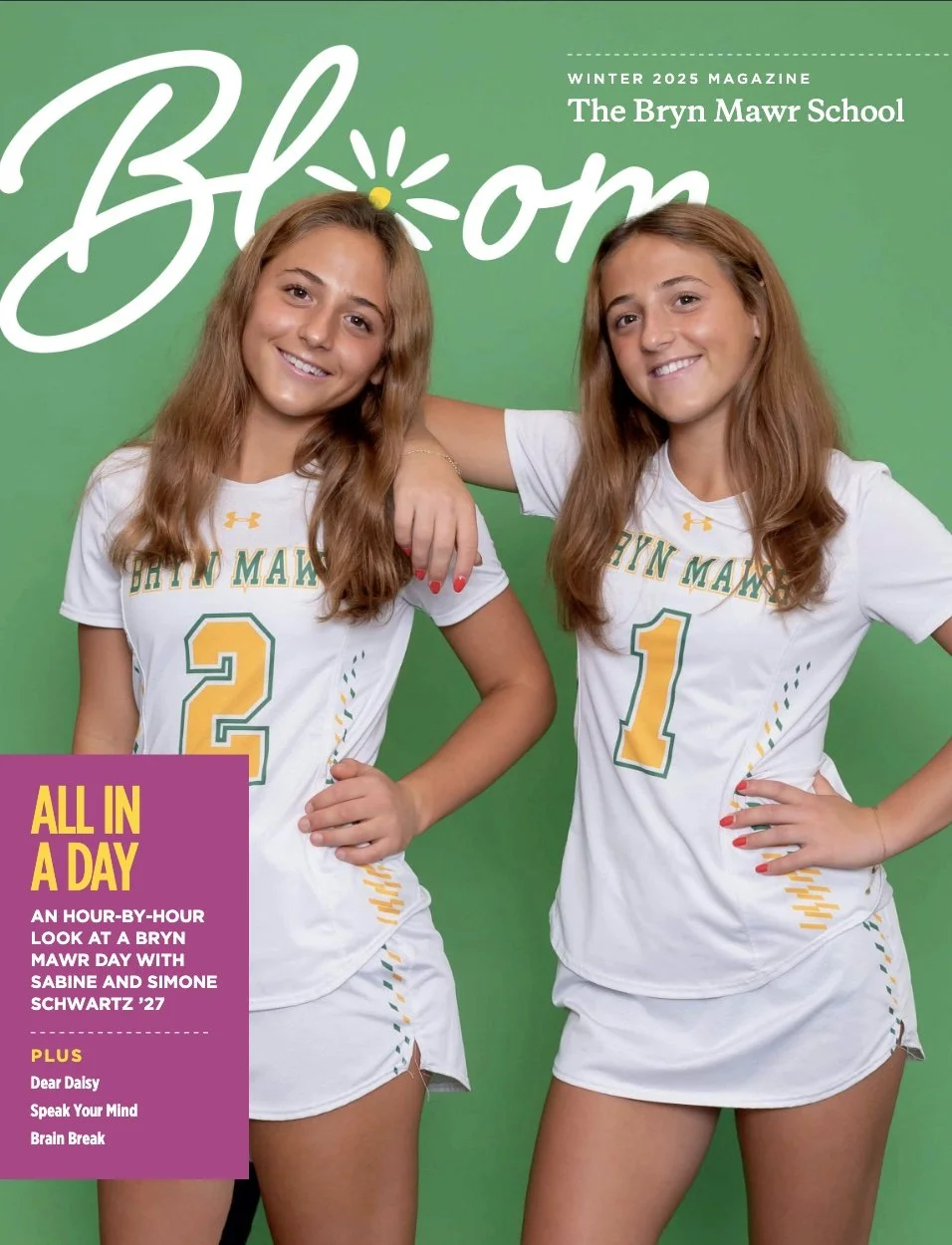
/Chosen because The Bryn Mawr School won Silver for Magazine Design (Enrollment 351 or More) in the 2025 Brilliance Awards. Bryn Mawr’s Senior Director of Communications, Deb Baum, told InspirED the backstory.

“It’s great to see a publication created specifically for students, rather than the more traditional parent-focused approach. This shift immediately strengthens its engagement potential.”
Step 1: Define the Genesis, Goal, and Strategy
The idea for Bloom began with a simple but powerful realization. Internal admissions research revealed that girls aged 5–14 hold at least half of the decision-making power in choosing a school. Despite this, most marketing efforts were directed almost entirely at parents.
As Deb Baum, Senior Director of Communications, explains, “Our research showed that prospective students have real influence in the decision-making process, but most school marketing wasn’t speaking to them at all. We saw an opportunity to change that.”
This gap created an opportunity to rethink the approach.
The team set out with two primary goals:
To engage prospective students directly in a way that felt authentic and exciting
To shift the school’s narrative beyond academic rigor and highlight its joyful, supportive, and close-knit community
Rather than relying on traditional messaging, the strategy centered on creating something immersive and editorial. The result was Bloom, a magazine that “shows, not tells” through lively, student-driven content. Each issue features elements like advice columns, “What’s in Your Backpack” snapshots, and playful interactive components. The tone is light, empowering, and relatable — what the team describes as “girl power” energy.
Even the name reinforces the concept. Bloom, inspired by the school’s daisy symbol, reflects growth, individuality, and a sense of belonging.
Step 2: Produce the Magazine and Manage the Timeline
The production process is intentionally collaborative but streamlined, allowing a small team to execute a high-quality publication without becoming overwhelmed.
The work begins with joint strategy sessions between the Communications and Admissions teams. From there, a two-person Communications team takes the lead on writing, editing, and most of the photography, while the Baltimore-based firm Skelton Sprouls manages design.
The timeline closely follows the rhythm of the admissions cycle, which helps maximize impact:
Fall Issue (September): Content is gathered in the spring while students are still on campus, then finalized over the summer
Winter Issue (January): A faster-paced production cycle begins in October, with delivery timed for peak application and decision season
Deb says, “For a small team, it’s all about being intentional with your time and resources. Partnering externally for design allows us to focus on storytelling while still producing something that feels truly best-in-class.”
This structure allows the team to balance thoughtful storytelling with strategic timing.
Step 3: Leverage Outside Expertise
A key factor in Bloom’s success has been the thoughtful use of external support.
Skelton Sprouls was initially brought in to help develop a visual identity that aligned with the school’s brand while still feeling fresh and editorial. Although the team briefly attempted to manage design fully in-house, it quickly became clear that doing so wasn’t sustainable given the scope of work and the size of the team.
Returning to an external design partner created a healthier and more effective balance. It allowed the internal team to stay focused on what they do best — storytelling and authenticity — while ensuring the final product remained visually compelling and competitive.
Step 4: Learn Lessons Along the Way
Every project comes with its learning moments, and Bloom was no exception.
The most memorable takeaway? Be cautious about adding labor-intensive extras. At one point, the team hand-folded 1,500 fortune tellers (also known as cootie catchers) to include in the magazine. While the idea was fun and on-brand, the execution required a significant investment of time and effort.
Aside from that experience, however, the team stands firmly behind their approach and wouldn’t make any major changes.
Step 5: Measure the Results
The response to Bloom has been overwhelmingly positive, both anecdotally and in terms of engagement.
Parents and students alike have embraced the magazine. One parent memorably described it as “girl power on steroids,” capturing the energy and spirit of the publication. More importantly, prospective families have shared that their daughters didn’t just read it — they devoured it.
That kind of engagement has led to several meaningful outcomes:
Increased excitement among prospective students about joining the community
Strong word-of-mouth buzz that extends beyond formal admissions channels
A deeper emotional connection to the school before students even apply
The impact doesn’t stop at recruitment. Bloom has also become a valuable retention tool. By featuring real student voices, stories, and faces, the magazine fosters pride and reinforces a sense of belonging within the current school community.
Advice for Small Teams
For smaller teams looking to replicate this kind of success, the key is to prioritize authenticity while working efficiently.
One of the most effective strategies has been crowdsourcing content directly from students. Using simple tools like Google Forms, the team gathers ideas, advice, and personal perspectives. Some submissions are used as-is, while others serve as starting points for deeper storytelling.
There are also practical ways to scale this concept depending on available resources:
Start with smaller formats like posters or postcards instead of a full magazine
Use student-generated content to populate digital displays across campus
Focus on quick, engaging formats such as “Top 5” lists or photo features
Deb emphasizes this approach, “You don’t have to start with a full magazine. The real goal is to elevate authentic student voices in formats that feel fun and accessible — because that’s the content your audience actually wants.”
Congratulations, The Bryn Mawr School! You are brilliant!
TEAM
Deb Baum, The Bryn Mawr School, Senior Director of Communications
Hannah Klarner, The Bryn Mawr School, Assistant Director of Communications
Design by Skelton Sprauls





![How To Create An Award-Winning [Anniversary] Magazine: Cardigan Mountain School](https://images.squarespace-cdn.com/content/v1/57532abf27d4bd17be970a61/1648569270513-JR73OVUH159CUU8B5CU9/14Cardigan.jpg)


Chosen because the Perkiomen School won Gold for Single Blog Post in the 2021 Brilliance Awards. Bernadette Kovaleski tells InspirED the backstory on the College Counseling project.